


Space Charge 2026
The John Adams Institute hosted Space Charge 2026, the 7th ICFA Beam Dynamics Mini-Workshop on Space Charge Physics, at the University of Oxford from 30 September to 2 October.
Around 80 accelerator scientists from laboratories and universities around the world came together to discuss the challenges of operating and designing high-intensity accelerators. The programme covered experimental and operational experience, machine design and beam-dynamics modelling, as well as open questions in space-charge beam physics.
A particular emphasis of the workshop was on discussion and exchange. Short, focused presentations were complemented by dedicated discussion sessions, while a lively poster session and 180-second flash talks gave participants further opportunities to share results and new ideas. Discussions throughout the three days looked at what has been learned from existing high-intensity facilities as well as how these lessons learnt inform the next generation of accelerators.
The workshop was organised by Prof. Adrian Oeftiger (JAI, University of Oxford) and Dr. Shinji Machida (ISIS Neutron and Muon Source), with an international Programme Committee representing major accelerator laboratories around the globe. The scientific programme concluded on Friday, followed by a visit to the ISIS Neutron and Muon Source at Rutherford Appleton Laboratory on Saturday.
Further information, including the scientific programme and contributions, is available on the workshop website:
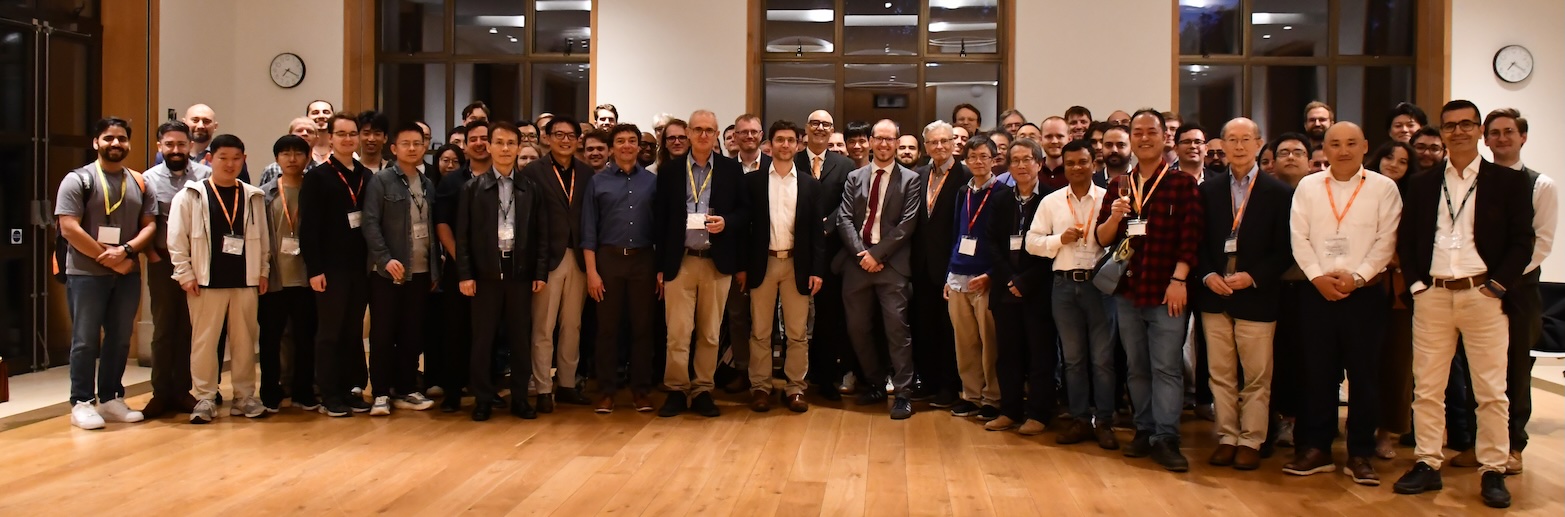
Group photo from Space Charge 2026

